

What are ceramides?
When skin feels dry, tight, reactive, or easily irritated, the issue is often treated as a surface problem.
More moisturizer. More active ingredients. More steps.
But in many cases, the skin does not need more complexity. It needs better barrier support.
Ceramides are one of the most important ingredients in barrier-focused skincare because they are naturally part of the skin’s structure. They help the skin hold onto moisture, protect itself from external stress, and maintain a calmer, more resilient appearance.
For sensitive or barrier-compromised skin, ceramides are not a trend. They are foundational.
What are ceramides?
Ceramides are lipids, or skin-identical fats, that are naturally found in the outermost layer of the skin.
They are part of the skin barrier: the protective layer that helps keep water in and irritants out. A helpful way to picture the barrier is as a brick wall. The skin cells are the bricks, and the lipids between them are the mortar. Ceramides are a major part of that mortar.
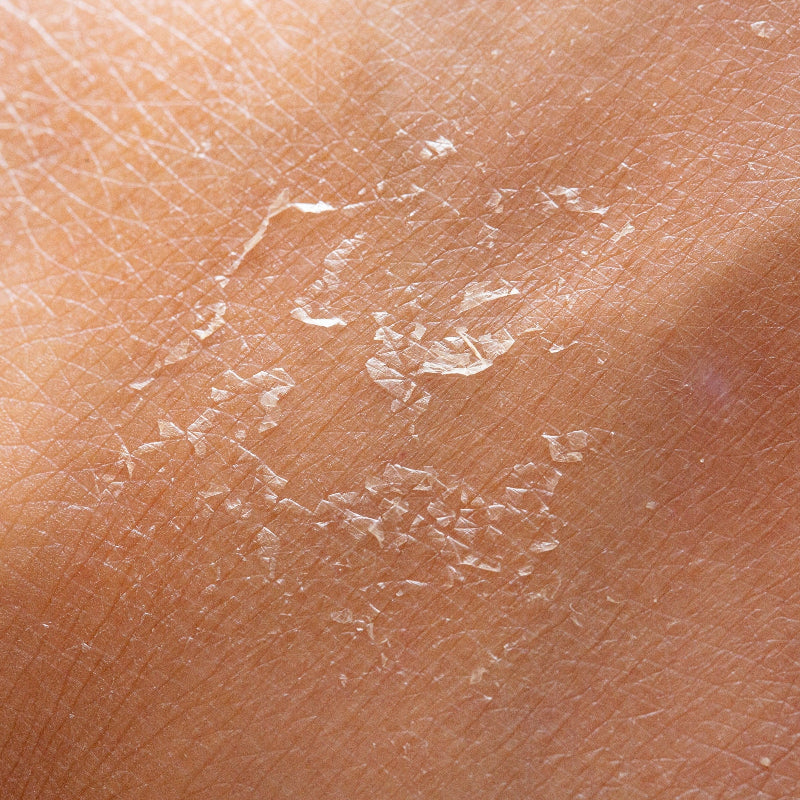
When the barrier is well supported, skin feels more comfortable, hydrated, and steady. When ceramide levels are depleted or the barrier is disrupted, skin can feel dry, rough, tight, flaky, or more reactive than usual.
What do ceramides do for the skin?
Ceramides help support the skin barrier by improving moisture retention and reinforcing the structure of the outer layer of the skin.
In skincare, ceramides are used to help:
Reduce the look and feel of dryness
Support barrier resilience
Improve skin comfort
Help reduce moisture loss
Support smoother, softer-looking skin
Ceramides do not work by exfoliating, resurfacing, or forcing a fast visible change. They work by helping restore the conditions the skin needs to function well.
That is why they are especially useful for skin that feels compromised, reactive, or easily overwhelmed.
Why are ceramides important for sensitive skin?
Sensitive skin often has a barrier that is more easily disrupted.
This can show up as tightness, stinging, redness, dryness, rough texture, or a feeling that products “suddenly” do not sit well on the skin. When the barrier is under-supported, even good ingredients can feel like too much.
Ceramides help because they support the skin’s natural protective structure. They are not there to push the skin harder. They are there to help the skin feel more stable.
For sensitive skin, that stability matters. A stronger-feeling barrier can make the entire routine feel easier to tolerate.
What causes ceramide loss?
Ceramide levels can be affected by age, environment, cleansing habits, over-exfoliation, harsh products, and seasonal changes.
Cold weather, dry indoor air, low humidity, and frequent washing can all leave the skin feeling more depleted. So can routines that rely too heavily on acids, retinoids, scrubs, or strong treatments without enough recovery support.
This is why the skin can feel more reactive during seasonal transitions, after travel, or during periods when the routine becomes too active.
Ceramide skincare helps rebuild comfort by giving the barrier back some of what it needs.
Are ceramides moisturizing?
Yes, but they are not moisturizers in the simple “add water” sense.
Hydrating ingredients, like glycerin or hyaluronic acid, help attract and hold water in the skin. Ceramides help support the lipid structure that keeps that water from escaping too easily.
In a well-designed formula, ceramides often work alongside humectants, emollients, and barrier-supportive ingredients. This combination helps skin feel hydrated, cushioned, and more resilient.
For dry or dehydrated sensitive skin, this layered approach is usually more effective than relying on one ingredient alone.
What skin types benefit from ceramides?
Ceramides can benefit almost every skin type, but they are especially helpful for:
Dry skin
Sensitive skin
Reactive skin
Barrier-compromised skin
Skin that feels tight or easily irritated
Skin using active ingredients like retinoids, acids, or brightening treatments
Even oily or combination skin can benefit from ceramides. A compromised barrier can happen in any skin type. Oiliness does not always mean the skin is well hydrated or well protected.
How do ceramides help barrier-compromised skin?
Barrier-compromised skin often feels like it cannot settle.
It may feel dry no matter how much moisturizer is applied. It may sting when products are used. It may look dull, flaky, uneven, or easily flushed. This is often a sign that the outer layer of the skin is not holding moisture well or defending itself comfortably.
Ceramides help by supporting the lipid matrix of the skin barrier. They help create the conditions for skin to feel less vulnerable to everyday stress.
They are not an overnight reset. Barrier repair takes consistency. But ceramides are one of the most important ingredient categories for helping compromised skin move back toward comfort.
What ingredients pair well with ceramides?
Ceramides work best when they are part of a complete barrier-supportive formula.
They pair especially well with:
Cholesterol, another natural skin lipid that helps support barrier structure.
Fatty acids, which help complete the lipid system of the skin barrier.
Phytosphingosine, a lipid-related ingredient naturally associated with the skin barrier.
Niacinamide, which supports barrier function and helps improve the look of uneven tone.
Panthenol and beta-glucan, which help support comfort and hydration.
Glycerin and other humectants, which help draw water into the skin.
This is why ceramide products are often more effective when they are designed as a system, rather than simply adding one ceramide into a formula for label appeal.
Are all ceramides the same?
Not exactly.
There are different types of ceramides used in skincare, including Ceramide NP, Ceramide AP, Ceramide EOP, Ceramide NG, and others. Each has a slightly different structure, but the overall purpose is similar: to support the skin barrier.
A formula does not necessarily need every type of ceramide to be effective. What matters is the full composition of the product, the ceramide blend, the supporting lipids, the concentration, the delivery system, and how the formula feels on the skin.
The ingredient list matters, but formulation matters more.
How often should you use ceramides?
Ceramides are usually suitable for daily use.
They can be used morning and night, depending on the formula and your skin’s needs. For barrier-compromised skin, consistent use is usually more helpful than occasional use.
Ceramides also fit well into routines with more active ingredients. If you use retinoids, acids, or brightening ingredients, a ceramide moisturizer can help keep the skin feeling more supported.
The goal is not to make the routine heavier. The goal is to make the skin feel more resilient.
Ceramides vs. hyaluronic acid: what is the difference?
Ceramides and hyaluronic acid both support hydrated-looking skin, but they work differently.
Hyaluronic acid helps bind water. Ceramides help support the barrier that keeps water in.
For sensitive or dry skin, one is not necessarily better than the other. They are complementary.
A formula with humectants and ceramides can help address both hydration and barrier support. This is especially helpful when skin feels dehydrated but also dry, tight, or easily irritated.
The barrier-first view
At TSOS, ceramides sit at the center of barrier-first skincare.
Many skin concerns are treated as separate issues: dryness, redness, dullness, rough texture, sensitivity. But the skin barrier influences all of them. When the barrier is depleted, the skin can look and feel less even, less calm, and less resilient.
Ceramides help bring the routine back to the foundation.
They support the structure that allows skin to hold hydration, tolerate actives, and recover from daily stress. For sensitive skin, that foundation is not optional. It is the starting point.
The takeaway
Ceramides are naturally occurring skin lipids that help support the skin barrier.
They help reduce moisture loss, improve comfort, and support skin that feels dry, reactive, or barrier-compromised. They are not a quick-fix active or a trend ingredient. They are part of the skin’s own architecture.
For sensitive skin, ceramides offer one of the most practical paths back to comfort: not by doing more to the skin, but by helping the barrier do what it was designed to do.
Reviewed by Connor Greig, P.Chem
Professional Chemist and Founder, TSOS Skincare
Sources
Bouwstra JA, Nădăban A, Bras W, McCabe C, Bunge A, Gooris GS. The skin barrier: An extraordinary interface with an exceptional lipid organization. Prog Lipid Res. 2023 Nov;92:101252. doi: 10.1016/j.plipres.2023.101252. Epub 2023 Sep 4. PMID: 37666282; PMCID: PMC10841493.
Kono T, Miyachi Y, Kawashima M. Clinical significance of the water retention and barrier function-improving capabilities of ceramide-containing formulations: A qualitative review. J Dermatol. 2021 Dec;48(12):1807-1816. doi: 10.1111/1346-8138.16175. Epub 2021 Oct 1. PMID: 34596254; PMCID: PMC9293121.
Berkers T, Visscher D, Gooris GS, Bouwstra JA. Topically Applied Ceramides Interact with the Stratum Corneum Lipid Matrix in Compromised Ex Vivo Skin. Pharm Res. 2018 Feb 6;35(3):48. doi: 10.1007/s11095-017-2288-y. PMID: 29411158; PMCID: PMC5801391.

Leave a comment
This site is protected by hCaptcha and the hCaptcha Privacy Policy and Terms of Service apply.