

Article: What is the skin barrier?
What is the skin barrier?
Your skin barrier is the reason your skin can protect itself.
It holds moisture in. It keeps irritants out. It helps skin stay calm, comfortable, and resilient in a world that constantly tries to disrupt it.
When the skin barrier is strong, skin feels balanced. Hydrated. Less reactive. More responsive to skincare.
When it is weakened, everything changes.
Dryness feels more persistent. Redness appears more easily. Products sting when they should soothe. Skin feels tight, unpredictable, and harder to care for.
This is why barrier health matters. Because better skin starts at the barrier.
What is the skin barrier?
The skin barrier is the outermost layer of your skin. It is part of the stratum corneum, the visible surface layer that protects the deeper layers beneath it.
Think of it as your skin’s protective seal.
Its job is to keep essential moisture inside the skin while helping block external stressors like irritants, pollution, harsh weather, allergens, and bacteria.
A healthy skin barrier does three essential things:
It helps prevent water loss.
It protects against environmental stress.
It keeps skin feeling calm, hydrated, and comfortable.
Without a strong barrier, skin becomes more vulnerable. Hydration escapes more easily. Irritants enter more easily. Sensitivity becomes more noticeable.
This is where many skin concerns begin.
Why the skin barrier is so important
The skin barrier is not just about dryness.
It affects how your skin looks, feels, and responds.
A healthy barrier supports smoother texture, better hydration, reduced reactivity, and a more even-looking complexion. It also helps skin tolerate active ingredients more effectively.
That matters because even the best skincare routine depends on barrier function.
If the barrier is compromised, products may not perform the way they should. Hydrating products may not feel hydrating enough. Active ingredients may feel irritating. Moisturizers may sit on the surface without relieving tightness.
Skin that cannot protect itself properly cannot respond optimally.
Barrier health is the foundation.
What is the skin barrier made of?
The skin barrier is often described as a brick wall.
The skin cells are the bricks. The lipids are the mortar.
Those lipids include ceramides, cholesterol, and fatty acids. Together, they help seal moisture into the skin and maintain a strong, flexible barrier.
The skin barrier also contains natural moisturizing factors, often called NMFs. These include components like amino acids, PCA, lactate, sugars, and minerals that help bind water within the skin.
This combination of lipids and natural moisturizing factors is what helps skin stay hydrated, smooth, and resilient.
When these elements are depleted or disrupted, the barrier becomes weaker.
And skin starts to feel it.
Signs of a healthy skin barrier
When your skin barrier is functioning well, your skin usually feels comfortable and stable.
Common signs of a healthy skin barrier include:
- Skin feels hydrated after cleansing
- Moisturizer keeps skin comfortable throughout the day
- Products apply without stinging
- Redness is minimal or temporary
- Texture feels smoother
- Skin feels less tight
- Sensitivity is reduced
- Active ingredients are better tolerated
Healthy skin does not mean perfect skin.
It means resilient skin.
Skin that can recover, adapt, and function with less disruption.
Signs your skin barrier may be damaged
A weakened or damaged skin barrier can feel confusing because it often looks like multiple skin concerns at once.
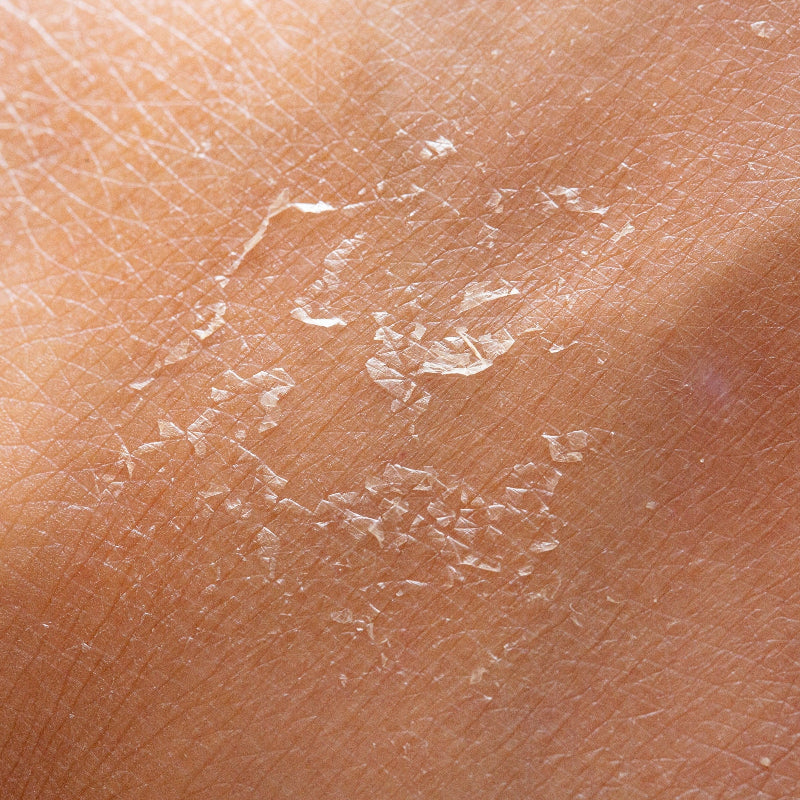
You may notice dryness, dehydration, redness, flaking, rough texture, dullness, stinging, burning, or increased sensitivity.
You may also feel like nothing works.
Your cleanser feels too stripping. Your serum stings. Your moisturizer disappears within an hour. Your skin feels both dry and congested.
That is often the barrier cycle.
When the skin barrier is compromised, the skin loses water more easily and becomes more exposed to irritation. This can make skin feel reactive, inflamed, and difficult to calm.
A damaged skin barrier is not skin being difficult.
It is skin asking for repair.
What damages the skin barrier?
The skin barrier can be disrupted by many everyday factors.
Common causes include harsh cleansers, over-exfoliation, frequent use of strong actives, dry climates, cold weather, low humidity, sun exposure, pollution, stress, and repeatedly changing products.
Sometimes the cause is obvious.
A peel. A new retinoid. Too many acids.
Other times, barrier damage builds slowly.
A foaming cleanser that leaves skin tight. Not enough moisturizer. Daily exfoliation. Layering products without recovery time.
The skin barrier does not need to be pushed constantly.
It needs consistency.
Skin barrier vs acid mantle
The skin barrier and the acid mantle are closely connected, but they are not exactly the same.
The skin barrier refers to the physical structure of the outermost layer of the skin. It helps protect, seal, and regulate moisture.
The acid mantle refers to the slightly acidic film on the skin’s surface. It helps support the skin’s microbiome and discourages the growth of unwanted organisms.
Both matter.
A healthy acid mantle supports a healthy barrier. A healthy barrier supports a more stable skin environment.
When either is disrupted, skin may become more reactive.
How to support your skin barrier
Supporting the skin barrier starts with reducing irritation and rebuilding comfort.
That does not mean doing more.
It often means doing less, but doing it better.
Use a gentle cleanser that does not leave skin tight. Apply a hydrating serum to support water content in the skin. Follow with a moisturizer that helps replenish and seal in moisture. Wear sunscreen daily to reduce environmental stress.
Look for barrier-supportive ingredients like glycerin, hyaluronic acid, sodium PCA, amino acids, ceramides, cholesterol, fatty acids, niacinamide, panthenol, squalane, and soothing botanical or marine-derived ingredients.
These ingredients help support hydration, moisture retention, and barrier resilience.
The goal is not to overwhelm the skin.
The goal is to make it feel safe again.
How long does it take to strengthen the skin barrier?
Some signs of barrier improvement can appear quickly.
Skin may feel less tight within days. Stinging may reduce. Moisturizer may start to feel more effective. Redness may become less reactive.
But deeper barrier support takes consistency.
For many people, meaningful improvement happens over several weeks of gentle, barrier-focused care.
That timeline matters because barrier repair is not a quick correction.
It is a rebuilding process.
Calm first. Strengthen second. Treat later.
Why barrier-first skincare works
Barrier-first skincare works because it starts with what skin needs to function.
Before brightening, firming, smoothing, or resurfacing, the skin needs hydration, comfort, and resilience.
A strong barrier helps skin tolerate active ingredients more effectively. It helps reduce visible reactivity. It helps keep moisture where it belongs.
This does not mean active ingredients are not important.
It means the barrier determines how well skin can receive them.
When the barrier is supported, skincare becomes more effective.
And skin becomes more responsive.
The foundation of better skin
The skin barrier is not a trend.
It is the foundation of skin health.
It is the structure that helps skin stay hydrated, calm, protected, and resilient. When it is strong, skin feels better. When it is compromised, everything becomes harder.
So if your skin feels dry, tight, red, reactive, or impossible to care for, start here.
Not with more correction.
With barrier support.
Because better skin starts at the barrier.
Reviewed by Connor Greig, P.Chem
Professional Chemist and Founder, TSOS Skincare
Sources
Bouwstra JA, Nădăban A, Bras W, McCabe C, Bunge A, Gooris GS. The skin barrier: An extraordinary interface with an exceptional lipid organization. Prog Lipid Res. 2023 Nov;92:101252. doi: 10.1016/j.plipres.2023.101252. Epub 2023 Sep 4. PMID: 37666282; PMCID: PMC10841493.
Choi EH, Kang H. Importance of Stratum Corneum Acidification to Restore Skin Barrier Function in Eczematous Diseases. Ann Dermatol. 2024 Feb;36(1):1-8. doi: 10.5021/ad.23.078. PMID: 38325428; PMCID: PMC10861303.
Sethi A, Kaur T, Malhotra SK, Gambhir ML. Moisturizers: The Slippery Road. Indian J Dermatol. 2016 May-Jun;61(3):279-87. doi: 10.4103/0019-5154.182427. PMID: 27293248; PMCID: PMC4885180.

Leave a comment
This site is protected by hCaptcha and the hCaptcha Privacy Policy and Terms of Service apply.