

What causes dry skin?
Dry skin is not just skin that needs more moisturizer.
It is often a sign that the skin barrier is not holding water the way it should. When the barrier is strong, skin feels soft, calm, and comfortable. When it is disrupted, moisture escapes more easily, leaving skin feeling tight, rough, flaky, dull, or reactive.
So if you are wondering why your skin is so dry, the answer usually starts with the barrier.
What is dry skin?
Dry skin happens when the outer layer of the skin does not have enough water, oil, or barrier-supporting lipids to stay comfortable.
Your skin barrier is the outermost layer of your skin. Its job is simple but essential: keep moisture in and help keep irritants out. When that barrier is working well, skin feels hydrated, flexible, and resilient. When it is weakened, water evaporates more easily from the skin’s surface.
That water loss is one of the main reasons skin starts to feel dry, tight, rough, or sensitive.
In other words: dry skin is often barrier-disrupted skin.
What causes dry skin?
There is rarely just one cause of dry skin. Most of the time, dryness happens when the skin is losing too much water, not producing enough protective lipids, or struggling to repair its barrier.
Here are the most common reasons your skin may feel dry.
A weakened skin barrier
The skin barrier is the foundation of healthy-looking skin.
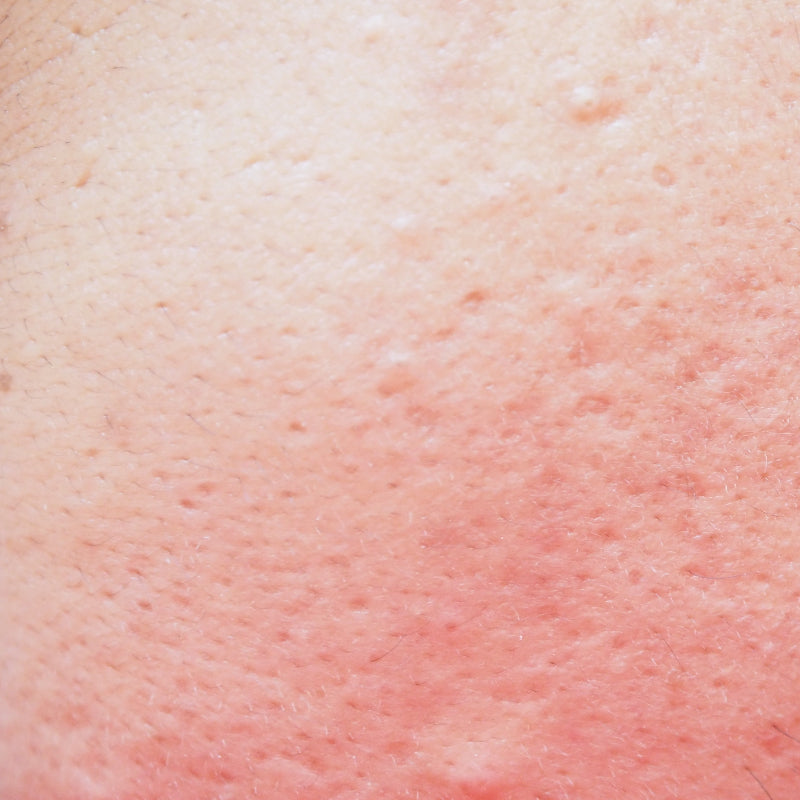
When it is strong, it helps hold moisture in the skin. When it is compromised, moisture escapes more easily. This can lead to dryness, flaking, tightness, redness, and sensitivity.
A weakened skin barrier can be caused by harsh cleansers, over-exfoliation, dry weather, hot water, strong active ingredients, or simply using too many products at once.
Signs your skin barrier may be disrupted include:
✔ Skin feels tight after cleansing
✔ Products sting when applied
✔ Skin looks red or irritated
✔ Texture feels rough or flaky
✔ Skin feels dry no matter how much moisturizer you use
✔ Your skin feels more reactive than usual
If this sounds familiar, your skin may not need more aggressive treatments. It may need recovery.
Low humidity and dry air
Dry air pulls moisture from the skin.
This is why dry skin often gets worse in colder months, heated indoor spaces, dry climates, and air-conditioned environments. When there is less moisture in the air, there is less moisture available to the skin.
The result is skin that feels tight, rough, flaky, or less comfortable throughout the day.
This is also why your skincare may seem to “stop working” in winter. Your skin may need more barrier support when the environment becomes drier.
Hot showers and long baths
Hot water can feel comforting, but it is not always barrier-friendly.
Long, hot showers and baths can strip the skin of its natural oils. These oils help support the skin barrier and reduce moisture loss. When they are removed too often, the skin can become dry, tight, and more vulnerable to irritation.
That tight feeling after washing is not a sign that your skin is deeply clean. It is often a sign that your skin has been stripped.
For dry skin, lukewarm water is usually better.
Harsh cleansers
Cleansing should remove what your skin does not need without taking away what it does.
Harsh soaps, strong foaming cleansers, and over-cleansing can disrupt the skin’s natural lipid layer. Once that layer is weakened, water escapes more easily and the skin becomes more sensitive to everything else in your routine.
If your skin feels tight immediately after cleansing, your cleanser may be too stripping.
A good cleanser for dry skin should leave your skin feeling clean, but still comfortable.
Over-exfoliation
More exfoliation does not always mean better skin.
Exfoliating acids, scrubs, retinoids, and brightening treatments can be useful, but only when the skin barrier can tolerate them. When used too often, they can push the skin past its limit.
Over-exfoliated skin may feel dry, shiny, tight, flaky, red, or unusually sensitive. Products that once felt fine may suddenly sting. Your skin may look dull, even though you are exfoliating more.
This is one of the most common causes of dry, reactive skin.
When the skin is overwhelmed, the answer is not another active. It is barrier support.
Aging and natural lipid loss
As skin ages, it naturally produces less oil. The skin barrier may also become less efficient at holding onto water.
This can make the skin feel drier, thinner, rougher, or less supple over time. Fine lines may look more visible when the skin is dehydrated because dry skin does not reflect light as smoothly.
This is why mature skin often needs more than lightweight hydration. It usually needs ingredients that support moisture, comfort, and barrier resilience.
Irritating ingredients
Some ingredients can make dry skin worse, especially when the barrier is already compromised.
Fragrance, essential oils, drying alcohols, harsh surfactants, and overly strong active ingredients can all contribute to irritation for some skin types.
This does not mean every active ingredient is bad. It means dry or sensitive skin needs a more intentional routine.
The goal is to support the skin first, then introduce stronger actives when the skin is ready.
Dry skin vs. dehydrated skin
Dry skin and dehydrated skin are often used interchangeably, but they are not exactly the same.
Dry skin lacks oil or barrier lipids.
Dehydrated skin lacks water.
You can have dry skin, dehydrated skin, or both. You can even have oily skin that is dehydrated.
Dehydrated skin often feels tight, dull, and tired-looking. Dry skin often feels rough, flaky, or uncomfortable. When the barrier is compromised, both can happen at the same time.
That is why the best routine for dry skin usually combines hydration with barrier support.
Why is my skin so dry even when I moisturize?
If your skin still feels dry after moisturizing, your moisturizer may not be addressing the full problem.
Dry skin does not just need water. It needs a system that helps attract water, hold water, and reduce water loss.
A strong dry skin routine usually includes:
Humectants to draw water into the skin
Emollients to soften rough texture
Barrier-supporting ingredients to help reduce moisture loss
When these work together, skin feels more hydrated, more comfortable, and less reactive over time.
If your skin feels good right after applying moisturizer but tight again an hour later, your barrier may need more support.
What ingredients help dry skin?
For dry skin, look for ingredients that hydrate, soothe, and support the skin barrier.
Helpful ingredients include:
✔ Glycerin
✔ Hyaluronic acid
✔ Sodium PCA
✔ Sodium lactate
✔ Amino acids
✔ Panthenol
✔ Allantoin
✔ Beta glucan
✔ Ceramides
✔ Niacinamide
These ingredients support different parts of the hydration process. Some help attract water. Some help calm discomfort. Some help reinforce the barrier so the skin can hold onto moisture more effectively.
The goal is not instant transformation.
The goal is steady recovery.
How to care for dry skin
Dry skin usually responds best to a simple, consistent routine.
Start with a gentle cleanser that does not leave the skin feeling tight. Apply hydrating serums while the skin is slightly damp. Follow with a moisturizer that supports the barrier. During the day, finish with sunscreen.
At night, focus on recovery. This is when dry skin often benefits most from barrier-supporting ingredients and a routine that gives the skin space to repair.
Avoid layering too many strong actives at once, especially if your skin is already dry, red, or reactive.
With dry skin, more is not always better. Better is better.
When to get help for dry skin
Most dry skin can be improved with the right routine and better barrier support. But if your skin is severely itchy, cracked, painful, bleeding, or not improving, it is worth speaking with a healthcare professional or dermatologist.
Sometimes dryness may be related to eczema, dermatitis, allergies, medications, or other underlying factors.
The bottom line
Dry skin is usually not random.
It is often the result of barrier disruption, moisture loss, low humidity, harsh cleansing, hot water, over-exfoliation, aging, or a routine that is asking too much from the skin.
Hydrate the skin. Support the barrier. Reduce the triggers. Give the skin time to recover.
Because comfortable skin starts at the barrier.
Reviewed by Connor Greig, P.Chem
Professional Chemist and Founder, TSOS Skincare
Sources
Purnamawati S, Indrastuti N, Danarti R, Saefudin T. The Role of Moisturizers in Addressing Various Kinds of Dermatitis: A Review. Clin Med Res. 2017 Dec;15(3-4):75-87. doi: 10.3121/cmr.2017.1363. Epub 2017 Dec 11. PMID: 29229630; PMCID: PMC5849435.
Sethi A, Kaur T, Malhotra SK, Gambhir ML. Moisturizers: The Slippery Road. Indian J Dermatol. 2016 May-Jun;61(3):279-87. doi: 10.4103/0019-5154.182427. PMID: 27293248; PMCID: PMC4885180.
American Academy of Dermatology Association. Dermatologists’ Top Tips for Relieving Dry Skin.

Leave a comment
This site is protected by hCaptcha and the hCaptcha Privacy Policy and Terms of Service apply.