

What Causes Sensitive Skin?
Sensitive skin is often described as skin that feels easily overwhelmed. It may sting after applying a product. It may flush when the weather changes. It may feel tight after cleansing, itchy after exfoliating, or reactive even when there is no obvious rash.
What is sensitive skin?
Sensitive skin is commonly understood as skin that experiences unpleasant sensations, such as stinging, burning, itching, prickling, tightness, or tingling, in response to triggers that would not bother most skin.
One of the confusing things about sensitive skin is that it does not always look irritated. Sometimes there is visible redness, dryness, flaking, or blotchiness. Other times, the skin looks relatively normal but still feels uncomfortable.
This is why sensitive skin can be frustrating. It is not always easy to prove from the outside, but the sensation is real.
The main causes of sensitive skin
Sensitive skin can have many contributing factors. For most people, it is not caused by one single thing. It is usually the result of several overlapping changes in the skin barrier, the skin’s nerve signaling, the immune response, and the environment.
1. A weakened skin barrier
Your skin barrier is the outermost protective layer of the skin. It helps keep water in and helps keep irritants, allergens, pollution, and microbes out.
When the barrier is functioning well, skin usually feels more comfortable and resilient. When the barrier is disrupted, the skin may lose water more easily, feel dry or tight, and become more reactive to products that were previously tolerated.
Barrier disruption can be caused by over-cleansing, harsh surfactants, over-exfoliation, low humidity, cold weather, sun exposure, irritating actives, or underlying skin conditions such as eczema or rosacea.
This is one of the most important ideas in sensitive skincare: skin that is reactive may not need more correction first. It may need barrier support first.
2. Increased water loss and dryness
Dryness is not just a cosmetic concern. When the skin does not hold water well, the surface can become rougher, tighter, and more vulnerable to irritation.
Ingredients and skin structures that support natural moisturizing factors, lipids, and barrier organization all help the skin maintain hydration. When these systems are depleted or disrupted, the skin can feel less flexible and more reactive.
This is why sensitive skin often feels worse after cleansing, during winter, after travel, or in dry indoor environments. The skin is not only dry. It is less buffered.
3. Overactive skin nerves
Sensitive skin is also connected to the skin’s sensory system. The skin contains nerve endings that help detect heat, cold, itch, pain, and irritation. In sensitive skin, these sensory pathways may become more reactive.
This can make ordinary stimuli feel intense. A moisturizer may sting. A cleanser may burn. Wind may feel sharp. Heat may trigger flushing. The skin may respond quickly, even when there is no visible damage.
This nerve sensitivity is one reason why sensitive skin care should be calm, consistent, and low-friction. The goal is not to force the skin into tolerance. The goal is to reduce unnecessary stimulation while supporting the barrier.
4. Inflammation and immune reactivity
Sensitive skin can also be influenced by low-level inflammation. This does not always mean a dramatic flare. It may show up as redness, warmth, itching, blotchiness, or a feeling that the skin is “on edge.”
When the skin barrier is compromised, more external substances can interact with the skin. This can increase irritation potential and contribute to a cycle of discomfort: barrier disruption leads to reactivity, reactivity leads to inflammation, and inflammation can further weaken the barrier.
A barrier-first routine helps interrupt this cycle by reducing triggers and replenishing the skin with supportive, well-tolerated ingredients.
5. Too many products or too much activity
Sensitive skin is often made worse by doing too much at once.
This can include using multiple exfoliating acids, retinoids, vitamin C products, scrubs, strong cleansers, masks, fragrance-heavy formulas, or frequent product changes. Even good ingredients can become too much when the skin is not ready for them.
For sensitive skin, more is not always more. A shorter routine can often be more effective than a complicated one.
A simple sensitive skin routine may include:
- A gentle cleanser
- A hydrating serum
- A barrier-supportive moisturizer
- Daily sunscreen
- Slow, intentional introduction of active ingredients only when the skin is calm
6. Environmental stress
Weather and environment can strongly affect sensitive skin. Cold air, wind, indoor heating, pollution, UV exposure, and sudden temperature changes can all increase dryness and reactivity.
For Canadian sensitive skin consumers, seasonal changes are especially important. Skin that feels comfortable in summer may feel tight, red, or reactive in winter. This does not mean your skin has changed permanently. It may simply need a more protective routine during barrier-stressing conditions.
7. Fragrance and potential irritants
Fragrance is not automatically harmful for everyone, but it is a common trigger for sensitive or reactive skin. Essential oils, highly fragranced products, strong botanical extracts, alcohol-heavy formulas, and aggressive exfoliants can also be difficult for some sensitive skin types.
The issue is not that every ingredient is “bad.” The issue is context. Sensitive skin usually benefits from formulas that are intentional, restrained, and designed to support the skin barrier rather than challenge it.
Is sensitive skin the same as allergic skin?
Not exactly.
Sensitive skin is often about discomfort, stinging, burning, tightness, or reactivity. An allergy involves the immune system and may cause symptoms such as persistent rash, swelling, hives, or intense itching.
Irritation and allergy can look similar, which is why persistent or severe reactions should be assessed by a healthcare professional or dermatologist.
As a general rule: if a product causes significant burning, swelling, blistering, ongoing rash, or symptoms around the eyes or lips, stop using it and seek professional guidance.
Why does sensitive skin sting after skincare?
Stinging can happen when the skin barrier is compromised or when nerve endings in the skin are more reactive. Water loss, micro-disruption in the barrier, low pH products, exfoliating acids, retinoids, fragrance, or certain preservatives can all contribute.
Sometimes the product is too strong. Sometimes the routine is too active. Sometimes the skin is simply not in a calm enough state to tolerate the product yet.
This is why we recommend approaching sensitive skin in stages: calm first, strengthen second, correct later.
How to care for sensitive skin
Sensitive skin care should be less about chasing trends and more about rebuilding consistency.
1. Simplify the routine
When skin is reactive, reduce the number of products. Give the skin fewer variables to process. A cleanser, serum, moisturizer, and sunscreen are often enough.
2. Support the skin barrier
Look for ingredients that help hydrate, replenish, and comfort the skin, such as glycerin, beta-glucan, panthenol, allantoin, squalane, ceramides, cholesterol, fatty acids, and hyaluronic acid.
These ingredients do not “force” the skin. They support the conditions the skin needs to function well.
3. Pause strong actives
If your skin is stinging, burning, peeling, or flushing easily, pause exfoliating acids, retinoids, strong vitamin C products, and aggressive masks until the skin feels calm again.
Actives can be helpful, but timing matters. Sensitive skin often needs a foundation before correction.
4. Reintroduce products slowly
When the skin is calm, add one product at a time. Use it for several days before adding another. This helps you understand what your skin tolerates and what may be causing irritation.
5. Be consistent
Sensitive skin often responds best to consistency. A calm routine used daily is usually more helpful than a complicated routine used inconsistently.
The TSOS approach to sensitive skin
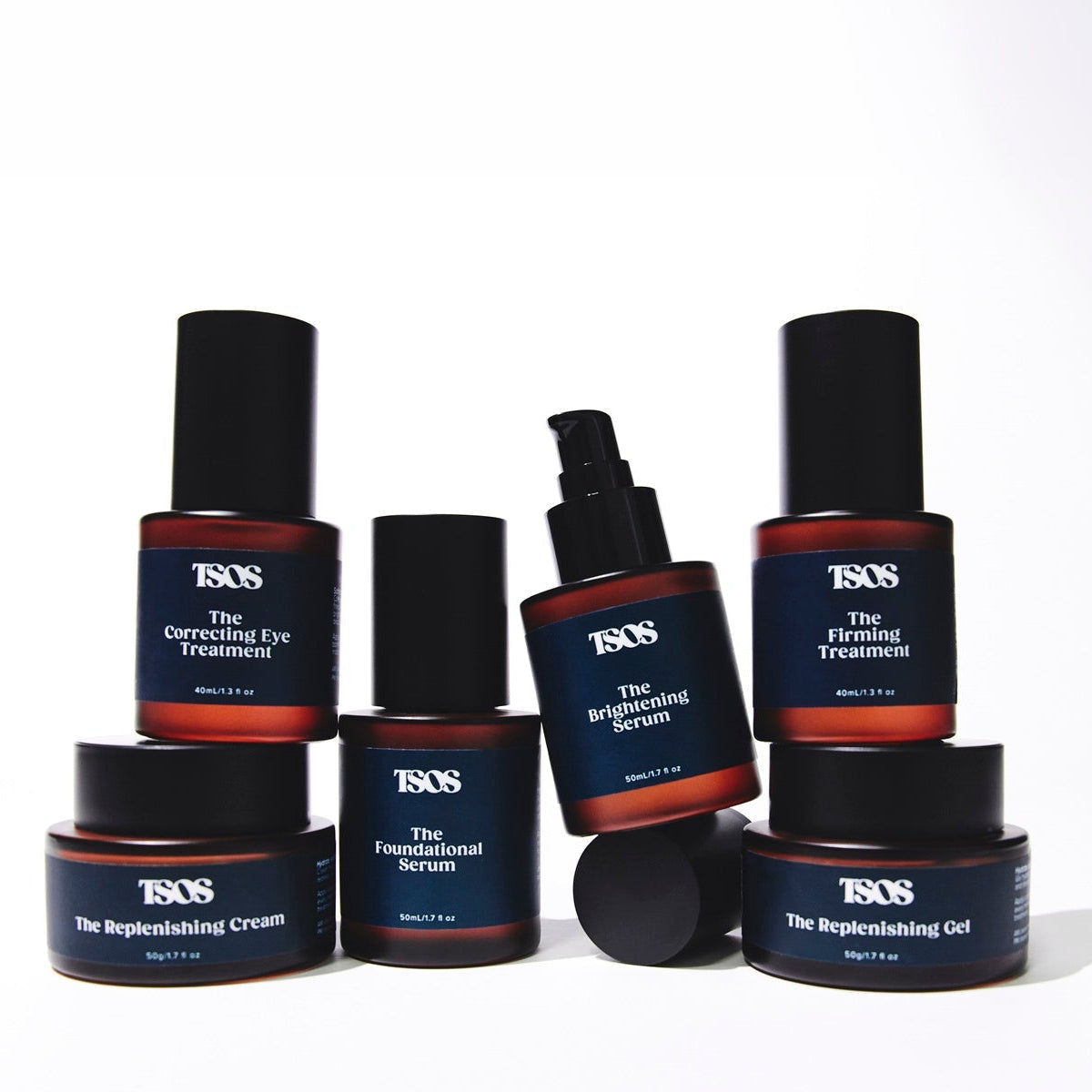
At TSOS™, we formulate for sensitive skin by starting with the barrier.
Our philosophy is simple: skin cannot perform its best when it is overwhelmed. Before brightening, firming, smoothing, or correcting, the skin needs hydration, comfort, and barrier support.
That does not mean sensitive skin cannot use active ingredients. It means the skin needs the right sequence, the right concentration, and the right supporting system.
Sensitive skin does not need to be punished into resilience. It needs to be supported into stability.
Frequently asked questions
Can sensitive skin go away?
Sensitive skin can improve when the skin barrier is supported and triggers are reduced. Some people are naturally more reactive, but many people find their skin becomes calmer with a consistent, barrier-first routine.
Why is my skin suddenly sensitive?
Sudden sensitivity can happen after over-exfoliation, retinoid use, weather changes, stress, illness, a new product, sun exposure, or a disrupted skin barrier. If sensitivity is severe, persistent, or accompanied by a rash, speak with a healthcare professional.
What ingredients should sensitive skin avoid?
Sensitive skin may be more likely to react to fragrance, essential oils, harsh cleansers, high-strength exfoliating acids, strong retinoids, and alcohol-heavy formulas. Tolerance varies, so it is best to introduce products slowly.
Is sensitive skin always dry?
No. Sensitive skin can be dry, oily, combination, or acne-prone. However, dryness and barrier disruption often make sensitivity worse.
What is the best routine for sensitive skin?
The best routine is usually simple, consistent, and barrier-supportive: gentle cleanse, hydrate, moisturize, protect with sunscreen, and introduce active ingredients slowly only when the skin feels calm.
Reviewed by Connor Greig, P.Chem
Professional Chemist and Founder, TSOS Skincare
Sources
Farage MA. The Prevalence of Sensitive Skin. Frontiers in Medicine. 2019.
Talagas M, Lebonvallet N, Leschiera R, et al. Role of Keratinocytes in Sensitive Skin. Frontiers in Medicine. 2019.
Kim Y, Lim KM. Skin Barrier Dysfunction and Filaggrin. Archives of Pharmacal Research. 2021.

Leave a comment
This site is protected by hCaptcha and the hCaptcha Privacy Policy and Terms of Service apply.