

What are the symptoms of barrier-disrupted skin?
Sometimes skin does not feel like itself.
It feels tight after cleansing. Products that once felt comfortable suddenly sting. Redness appears more easily. Makeup sits unevenly. Dry patches return no matter how much moisturizer you apply.
These are common signs of barrier-disrupted skin, a state where the skin’s outermost protective layer is not functioning as well as it should. The skin barrier, also called the stratum corneum, helps reduce water loss and protects the skin from external stressors. When it becomes disrupted, skin can lose moisture more easily and become more reactive to the world around it. Research on the epidermal barrier links impaired barrier function with increased transepidermal water loss, dryness, sensitivity, and visible roughness.
For many people, barrier disruption does not look dramatic at first. It often begins quietly, as a feeling.
The most common symptoms of barrier-disrupted skin
Barrier-disrupted skin can show up differently depending on your skin type, environment, and routine. But there are a few symptoms that appear again and again.
The most common signs include:
Tightness, especially after cleansing
Skin may feel pulled, stretched, or uncomfortable shortly after washing. This can happen when the skin is losing water faster than it can hold onto it.
Dryness that does not seem to improve
Barrier-disrupted skin often feels dry even after moisturizer. The issue is not always a lack of product. It may be that the skin is struggling to retain hydration effectively.
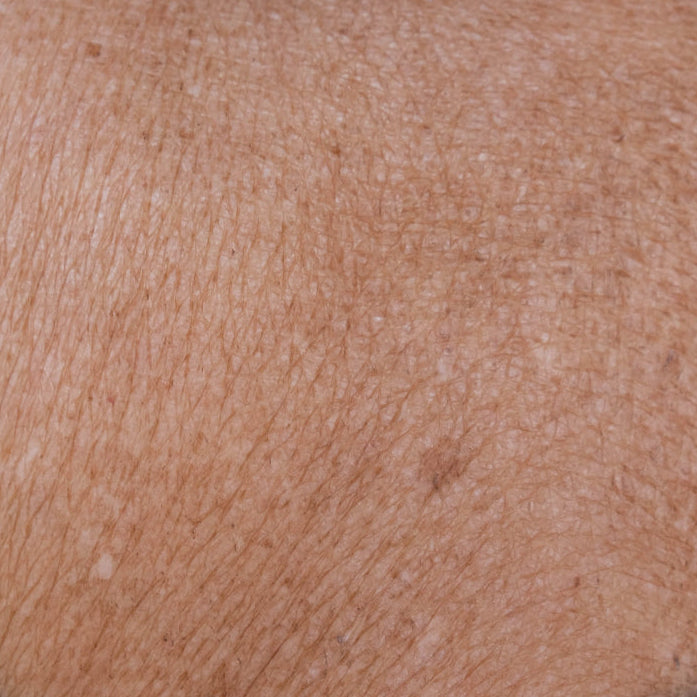
Flaking or rough texture
When the outer layer of the skin is not shedding smoothly, it can appear flaky, uneven, or dull. Barrier disruption can affect how skin cells separate and renew at the surface.
Stinging or burning from skincare
A cleanser, serum, or moisturizer that used to feel fine may suddenly feel sharp, warm, or uncomfortable. Sensitive skin is often described through sensations like stinging, burning, itching, or tingling.
Redness or visible reactivity
Skin may flush more easily or look irritated after cleansing, applying products, being outside, or moving between hot and cold environments.
Itching or discomfort
Dry, barrier-stressed skin can become itchy. The American Academy of Dermatology notes that very dry skin can itch, and some products may make overly dry skin feel worse if they contain irritating ingredients.
A shiny but dry appearance
This is one of the most overlooked signs. Skin can look tight and slightly shiny, but still feel dehydrated underneath. This often happens when the surface is stressed, not well moisturized, or over exfoliated.
Breakouts and congestion alongside dryness
A disrupted barrier does not always mean skin is only dry. Some people experience blemishes, bumps, or congestion at the same time as tightness and sensitivity. This can make the skin feel confusing: oily in some areas, dry in others, and reactive everywhere.
What does barrier-disrupted skin feel like?
Barrier disruption is often sensory before it is visible.
It may feel like your skin is asking for less, not more. Less exfoliation. Less switching between products. Less intensity.
Your skin may feel:
Tight. Thin. Hot. Easily irritated. Uncomfortable after cleansing. Sensitive to products that never used to bother you.
This is why barrier-disrupted skin is often mistaken for “bad skin,” when it may actually be overwhelmed skin.
What causes the skin barrier to feel disrupted?
Barrier disruption can be triggered by many factors, including over exfoliation, harsh cleansing, frequent use of strong actives, cold weather, low humidity, sun exposure, stress, and using too many products at once.
It can also happen when the skin is naturally sensitive or prone to dryness. Sensitive skin is not always caused by one single issue. Research suggests it can involve barrier function, nerve response, environmental triggers, and individual skin biology.
In other words, barrier disruption is not a personal failure. It is often the result of skin being pushed past its comfort threshold.
Is barrier-disrupted skin the same as sensitive skin?
Not exactly.
Sensitive skin is a broader skin state. It describes skin that reacts more easily to products, weather, friction, heat, or other triggers. Barrier disruption can contribute to sensitivity, but not all sensitive skin is barrier-disrupted, and not all barrier disruption looks the same.
A simple way to think about it:
Sensitive skin is how skin tends to respond.
Barrier-disrupted skin is what can happen when the skin’s protective surface is compromised.
The two often overlap, which is why barrier-first skincare can be especially helpful for people who experience dryness, redness, tightness, and reactivity.
How to tell if your skin barrier may be disrupted
Your skin barrier may be disrupted if your skin feels less tolerant than usual.
You may notice that your normal routine suddenly feels too active. Products absorb strangely. Moisturizer does not seem to last. Your skin looks dull, red, rough, or uneven, even when you are doing “everything right.”
A helpful question to ask is:
Does my skin feel calm after my routine, or does it feel like it needs to recover from it?
If your routine leaves your skin feeling tight, hot, shiny, itchy, or stinging, your barrier may need support.
What barrier-disrupted skin needs
Barrier-disrupted skin usually needs a simpler, more supportive routine.
That means gentle cleansing, consistent hydration, replenishing ingredients, and moisturizers that help reduce water loss. Ingredients like glycerin, hyaluronic acid, amino acids, sodium PCA, ceramides, niacinamide, and barrier-supportive lipids are often used in formulas designed to support hydration and skin comfort.
The goal is not to force the skin into change. The goal is to help it return to a more resilient state.
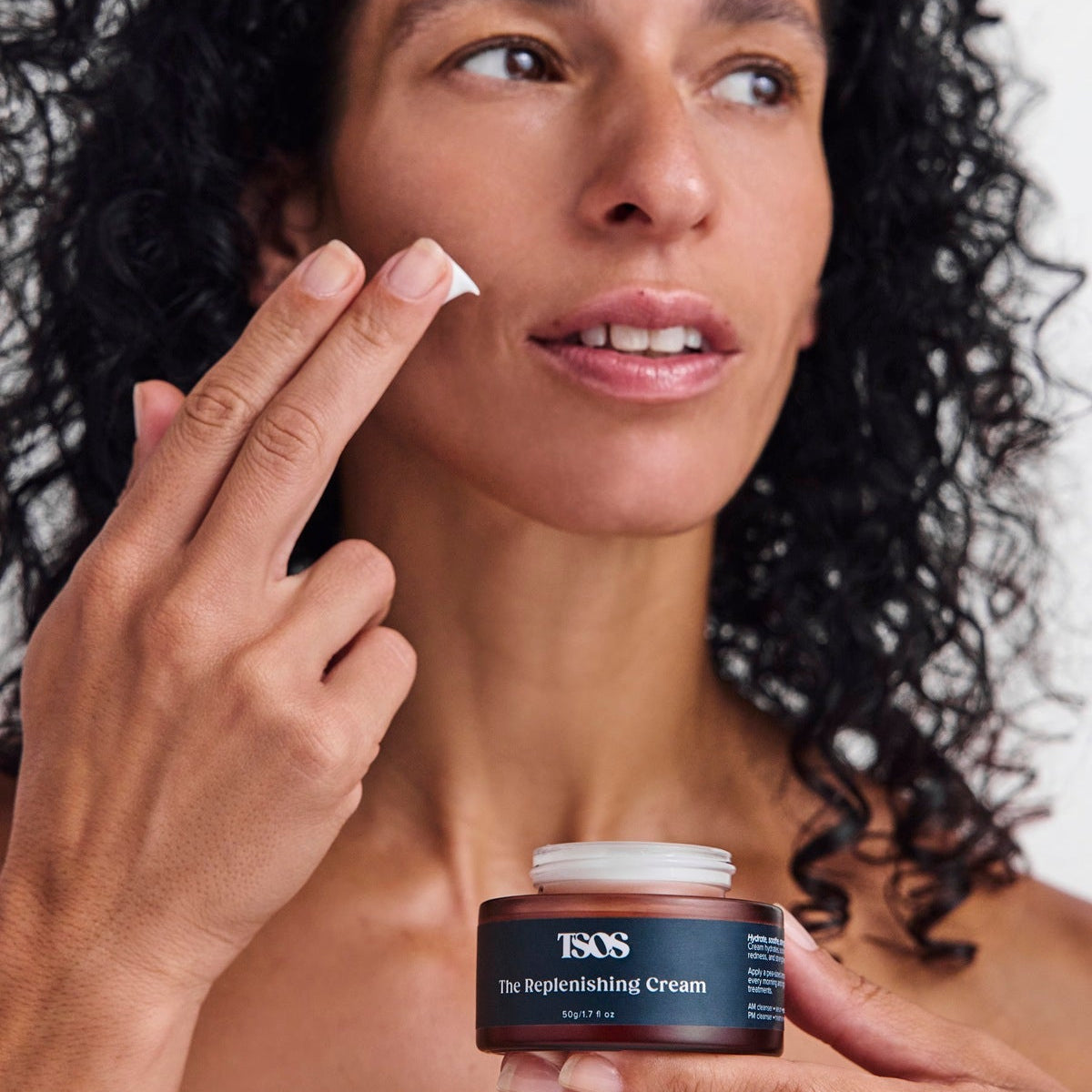
For TSOS, this is the foundation of barrier-first skincare: supporting the skin’s ability to hold water, stay comfortable, and tolerate a thoughtful routine over time.
When to pause active skincare
If your skin is stinging, peeling, burning, or becoming increasingly reactive, it may be time to pause strong actives such as exfoliating acids, retinoids, and high-strength treatments until your skin feels more settled.
This does not mean actives are bad. It means timing matters.
Healthy-looking skin is not built by constantly increasing intensity. It is built by matching the routine to what the skin can tolerate.
When to see a professional
If your skin is persistently painful, severely itchy, cracked, bleeding, swollen, or not improving, it is best to speak with a dermatologist or qualified healthcare professional. Some symptoms can overlap with skin conditions that need medical diagnosis or treatment.
The quiet signs matter
Barrier-disrupted skin does not always announce itself dramatically.
Sometimes it is the tightness after cleansing. The moisturizer that no longer feels like enough. The redness that appears more easily. The serum that suddenly stings.
These quiet signs are worth listening to.
When skin feels reactive, dry, or uncomfortable, the answer is not always a stronger product. Often, it is a more intelligent routine. One that supports hydration, comfort, and barrier resilience first.
Reviewed by Connor Greig, P.Chem
Professional Chemist and Founder, TSOS Skincare
Sources
Del Rosso JQ, Kircik L. Skin 101: Understanding the Fundamentals of Skin Barrier Physiology-Why is This Important for Clinicians? J Clin Aesthet Dermatol. 2025 Feb;18(2):7-15. PMID: 40078856; PMCID: PMC11896616.
Duarte I, Silveira JEPS, Hafner MFS, Toyota R, Pedroso DMM. Sensitive skin: review of an ascending concept. An Bras Dermatol. 2017 Jul-Aug;92(4):521-525. doi: 10.1590/abd1806-4841.201756111. PMID: 28954102; PMCID: PMC5595600.
American Academy of Dermatology Association. Dermatologists’ Top Tips for Relieving Dry Skin.

Leave a comment
This site is protected by hCaptcha and the hCaptcha Privacy Policy and Terms of Service apply.